
This MRSAM version is a surface-to-air missile developed jointly by DRDO and Israel Aerospace Industries for use by the Indian Army.

The missile showcased its precision and capability to neutralise targets, the statement said.

The missile is India's first indigenously developed anti-radiation missile that has speed of Mach two or twice the speed of sound.

The tests were conducted by the Indian Air Force, which will be the first service to induct the Akash missiles in its inventory.

The successful test will result in huge savings of replacement cost of missiles held in the inventory of the Indian Armed Forces.

The MRSAMs were test-fired from the Integrated Test Range launch pad-III at Chandipur near here before noon
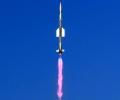
The quick reaction surface-to-air-missile missile developed by DRDO was test launched from the Integrated Test Range at Chandipur near here at about 3.08 pm from a vertical launcher against an electronic target at a very low altitude.

The missile was fired from a ground mobile launcher at launch pad number-1 of the Integrated Test Range (ITR) near here at 3.55 pm, and it hit the target with accuracy, the sources said.

On both the occasions, the missiles intercepted the simulated targets with pinpoint accuracy. The missiles were tested for minimum and maximum range.

The vehicle can be used as an aerial target for evaluation of various missile systems.

Two days after a successful trial, the advanced version of pilotless target aircraft Lakshya-II was again successfully flight-tested at the Integrated Test Range (ITR) near Balasore in Odisha on friday.
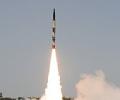
The surface-to-surface missile was test-fired from a mobile launcher at about 0830 hrs from launch pad-4 of the Integrated Test Range (ITR) at Wheeler Island, about 100 km from Balasore in Odisha, defence sources said.
"The sophisticated surface-to-surface missile was flight tested at around 1100 hours from a mobile launcher at ITR's launch complex-3 as part of an operational exercise," defence sources said.
India on Friday successfully test fired its two indigenously-developed surface-to-air 'Akash' missiles of Air Force version with a strike range of 25 km from the Integrated Test Range at Chandipur near Balasore in Odisha.
Two medium-range surface-to-air missiles 'Akash' were successfully test-fired from the Integrated Test Range (ITR) at Chandipur-on-sea, about 15 km from Balasore.
The surface-to-surface missile took off from an underground silo at the launch complex-3 in the ITR at about 1428 hours, defence sources said.
Two indigenously developed surface-to surface missiles were planned to be fired from a mobile launcher in salvo mode from the launch complex-3 of ITR as part of user trial by the Army, defence sources said.
India successfully testfired its indigenously developed, nuclear-capable, ballistic missile Prithvi-II from the Integrated Test Range at Chandipur, about 15 km from Balasore off the Orissa coast, on Friday.
India on Sunday successfully test-fired its indigenously developed, nuclear-capable, short range ballistic missile (SRBM) Agni-1 from the Integrated Test Range (ITR) at Wheeler Island, about 100 km from Balasore off Orissa coast.

India on Friday successfully test-fired the new surface-to-air missile, developed jointly with Israel, with a strike range upto 70 km, from a defence base off Odisha coast, a day after two similar trials were conducted.
India successfully tested the advanced version of Lakhsya, the indigenously built Pilotless Target Aircraft from the Integrated Test Range at Chandipur-on-sea, about 15 km from Balasore, for the third consecutive day on Wednesday.

A land-attack version of the missile was test-launched from Launch Pad-3 of the Integrated Test Range (ITR). An air force variant was fired from an IAF fighter jet over Bay of Bengal.
After a vertical lift-off at 12.15 pm from launch pad number three at the ITR, 15 km from Balasore, the surface-to-surface missile rose into the sky leaving behind a ribbon of white smoke, defence sources said.

The state-of-the-art advanced missile, a product of joint venture between India and Israel.
India successfully conducted the third developmental trial in four days of its indigenously developed beyond visual range air-to-air missile 'Astra' on Monday from the integrated test range at Chandipur, 15 km from Balasore in Odisha.
Two days after its successful trial, India on Saturday again test-fired the indigenously developed surface-to-air Akash missile from the test range at Chandipur near Balasore. "The user specific trial, which formed part of the country's routine air defence exercises, was conducted from the ITR," said a Defence Research Development Organisation official associated with the Akash missile project.
The air-to-air missile is to form the main interception armour of the indigenously developed Light Combat Aircraft.
India on Wednesday successfully test fired its indigenously developed surface-to-air 'Akash' missile of the Air Force version from the integrated test range at Chandipur near Balasore in Odisha, the fifth trial of the anti-aircraft system in the last fortnight.
Adding teeth to its nuclear deterrence, India on Tuesday successfully test-fired an advanced variant of nuclear-capable Agni-II ballistic missile with a strike range of 3,000 km from an island off Odisha coast.
In a leap forward to fortify its skies, India successfully test-fired its indigenously developed interceptor missile which destroyed a 'hostile' target ballistic missile, a modified Prithvi, at an altitude of 16 km over the Bay of Bengal.

The missile successfully flew in its pre-set trajectory meeting its mission objectives
India on Saturday successfully test-fired indigenously developed ballistic missiles 'Prithvi-II' and 'Dhanush' from different locations off the Orissa coast, adding more firepower to the armed forces.

The missile, which is about nine metres in length and one metre in width, can carry conventional as well as nuclear warheads and has a range of 350 kilometres.

The missile positioned at launch pad-3 of the ITR swung in to action after getting signal from the radars to intercept a moving aerial target supported by an unmanned air vehicle (UAV) 'Banshee' over the Bay of Bengal, officials said.
A mock air defence exercise relating to India's indigenously developed interceptor missile is carried out from Wheeler's island off the Orissa coast today.
The ground range instrumentation from ITR and the radar located near the impact point tracked the missile trajectory and monitored all the parameters from launch, the source said.
Lakshya was flown as a support system to gauge the precision control of the short range missile.
It was the naval version of Prithvi, which has a range of 250 to 300 km.
With a launch weight of 4.6 tonne which included payload of one tonne, Prithvi can use both solid as well as liquid propellant.

India has tested a 1,000 kg indigenously-developed glide bomb, which successfully hit a target 100 km away, in the Bay of Bengal off the Odisha coast, making the country self-reliant in guided precision bombs.
 © 2026 Rediff.com - Advertise with us - Disclaimer - Privacy Policy - Sitemap - Feedback - About us - Terms of use - Grievances